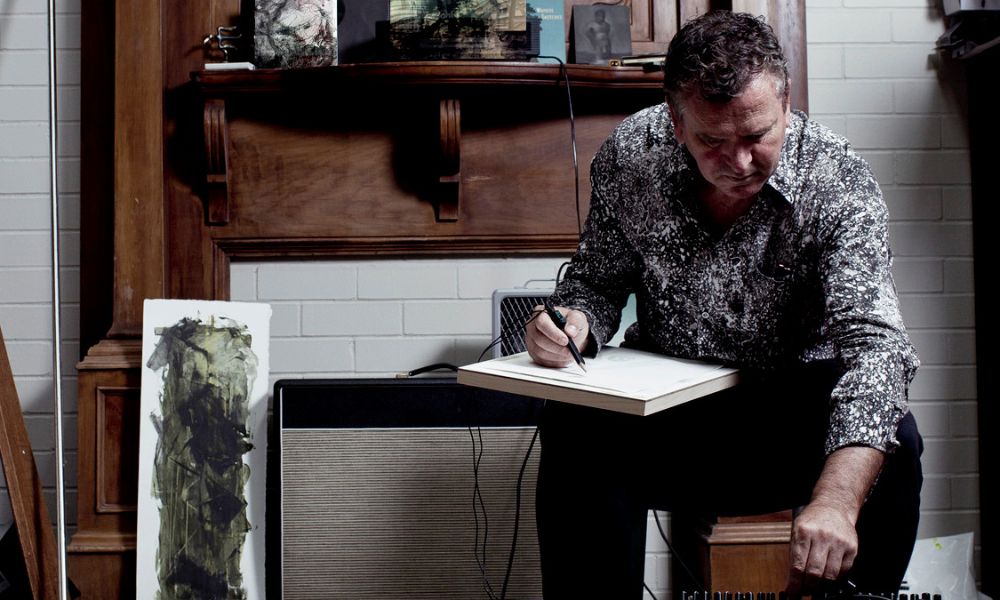
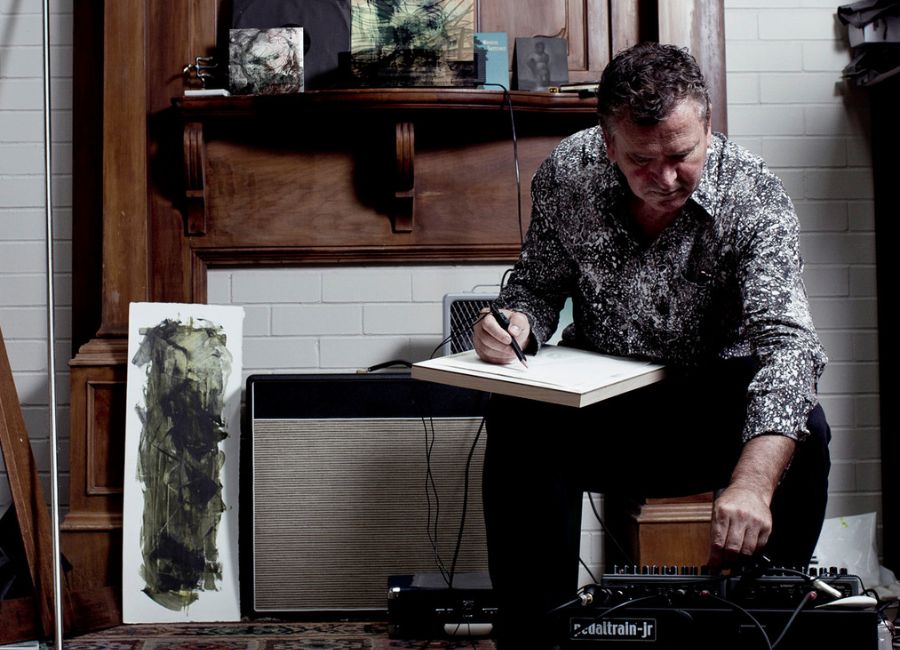
Artist Q&A: Dr Jon Tarry – Sculpture, Sonic Arts, and the Expansive Possibilities of Glass

With projects ranging from Perth Stadium to passenger terminals across the Metronet project, Jon Tarry is a widely recognised and influential visual artist leaving his mark on the built environment across Western Australia. In this artist interview, Jon reflects on glass as a creative medium, the value of commissioned public art, and the cultural significance of placing art where people live, work, and gather.
How did your career as an artist develop?
Working in the expanded field of visual and performing arts in 2025 presents the artist with new possibilities to engage with people. I emerged as an artist through multiple art school and university experiences in WA and internationally. This is a counter narrative to the untrained practitioner. Like many artists I have taken many pathways, driven by an intense curiosity of culture in a broad sense, and how this inflects on what it means to be human within societies of accelerating change.
Essentially, I like to make things, and mediate across artforms and social bounds. Art is an agent for change.
Glass is elemental — heated earth, formed by rapidly cooling molten sand, soda and lime. Its disordered atomic structure gives it transparency, and although solid, it remains in a state of continuous fluidity.
How do you incorporate feedback from clients or collaborators into your work?
In commissioned artworks, a well-researched and articulated brief opens up possibilities rather than reducing scope. The artist leads the pursuit of ideas, and clients who have faith in their artist are rewarded.
Collaboration presents different challenges and pathways to artful outcomes. Art is vastly different from design, yet the two are often blurred. Art takes the open looping path, while design tends toward linearity. When discussing glass in art, one can look back to Marco Polo, stained glass, alabaster, or lanterns and lighthouses — each carrying metaphorical and cultural weight across history.
What has been your most challenging project to date?
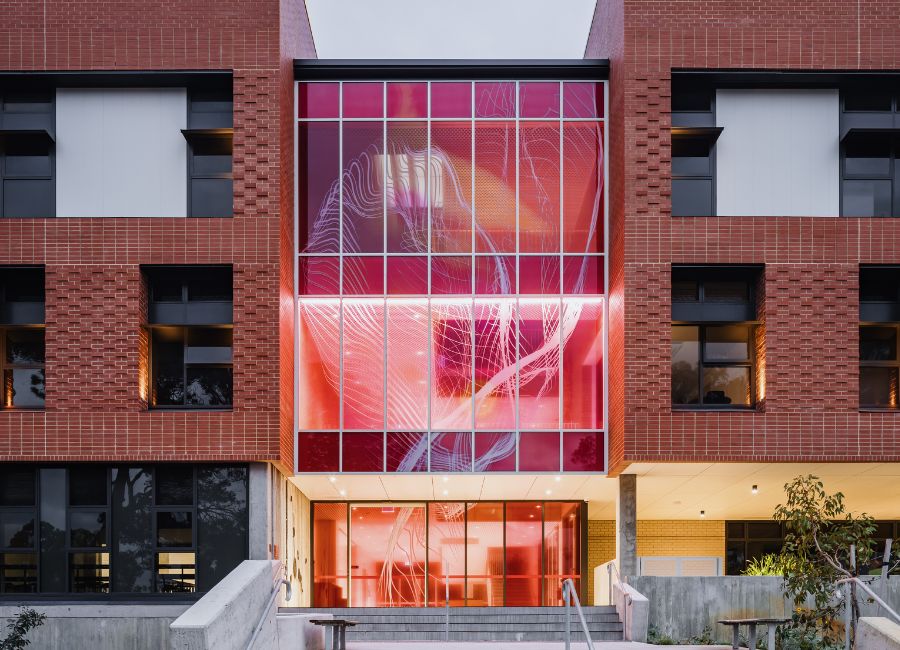
Bob Hawke College was a great achievement, along with five Metronet stations on the Armadale line, that has now been officially opened to the public.
I am currently working on a project that, if realised, will be the largest single glass artwork in the southern hemisphere — over 200 metres of continuous art glass imagery.
The challenge lies not only in scale and technology but in recognising the value of artistic work. Clients want the vision but are often hesitant to invest appropriately. It is humiliating to be devalued in this process, when in truth, an artist’s vision adds enormous cultural value. I believe in time, artistic foresight will be appreciated for its contribution to our shared environments.

What advice do you have for students currently studying, or considering a career in visual arts?
I don’t have advice other than: keep exploring, remain open, and test the parameters of your medium. Commissioned art isn’t for everyone, but if it’s your path, develop yourself as an artist, read, talk, and see as much as possible.
Art often sparks ridicule before appreciation — I’ve had thousands laugh at my work, only for it to later become revered as part of our shared cultural fabric. Resilience and embracing critique are essential.
What does the future hold for public art in Perth, and Australia?
The future is bright. Commissioned art in the public realm is maturing, with Perth leading the way. Art belongs where people are. While galleries have their role as forums for critique, public art embeds culture in everyday life.
It truly is a Black Swan moment for Perth — a chance to expand the scale, range, and participation in art, enriching our collective sense of place.
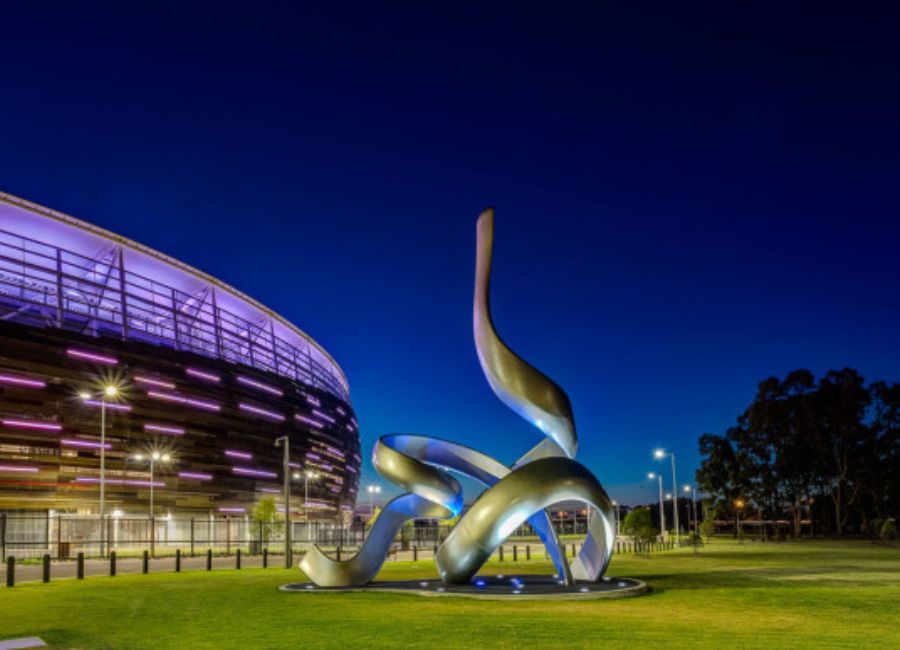
Where could someone go in Perth to view one of your projects?
Convergence at Perth Stadium, Waterlines at Yagan Square, the Firefighters Memorial at Kings Park, works at Bob Hawke College, and five Metronet stations on the Armadale line. And, with hope, the upcoming 200-metre glass artwork will set a new benchmark in scale and vision.